Digital Manufacturing · Intelligent Quoting Case Study
From days to hours. From hours to revenue.
A digital manufacturing company processing CNC production jobs — brake housings, bevel gears, custom components — was bottlenecked at the quoting stage. Every inbound request required manual review of CAD drawings, material analysis, and production planning before a quote could go out. The result: days of turnaround, lost deals to faster competitors, and a quoting team buried in repetitive analysis. We deployed an AI-powered quoting engine that monitors CAD files, analyzes material specifications and production requirements, and generates accurate quotes in hours instead of days.
quote turnaround time — from multi-day manual process to same-day delivery
increase in quoting volume — more quotes out the door, faster
conversion rate driven by speed-to-contact advantage
additional headcount on the quoting team — same team, exponentially more output
Problem
The operational constraint
The company had a high-value workflow that still depended on manual analysis, scattered systems, and human follow-up. The limiting factor was not demand. It was operational capacity: the business could not scale the workflow without adding more people, more handoffs, and more management overhead.
A digital manufacturing company processing CNC production jobs — brake housings, bevel gears, custom components — was bottlenecked at the quoting stage. Every inbound request required manual review of CAD drawings, material analysis, and production planning before a quote could go out. The result: days of turnaround, lost deals to faster competitors, and a quoting team buried in repetitive analysis. We deployed an AI-powered quoting engine that monitors CAD files, analyzes material specifications and production requirements, and generates accurate quotes in hours instead of days.
System Design
The AI agent operating system we deployed
Intake & Triage
- →Lead capture agent — monitors inbound emails, web forms, and RFQs to automatically route new quoting requests
- →CAD analysis agent — ingests technical drawings and extracts part geometry, tolerances, and complexity scoring
- →Material classification agent — identifies material type, grade, and sourcing requirements from specs and drawings
Quoting Engine
- →Production planning agent — determines machine time, tooling, setup, and run estimates based on part analysis
- →Cost modeling agent — calculates material cost, labor, overhead, and margin to produce an accurate quote
- →Quote generation agent — assembles the final quote package with pricing, lead time, and production notes for client delivery
Pipeline & Conversion
- →Speed-to-contact agent — ensures quotes reach prospects within hours, not days, dramatically improving conversion rates
- →Follow-up agent — tracks open quotes, sends timely reminders, and escalates high-value opportunities
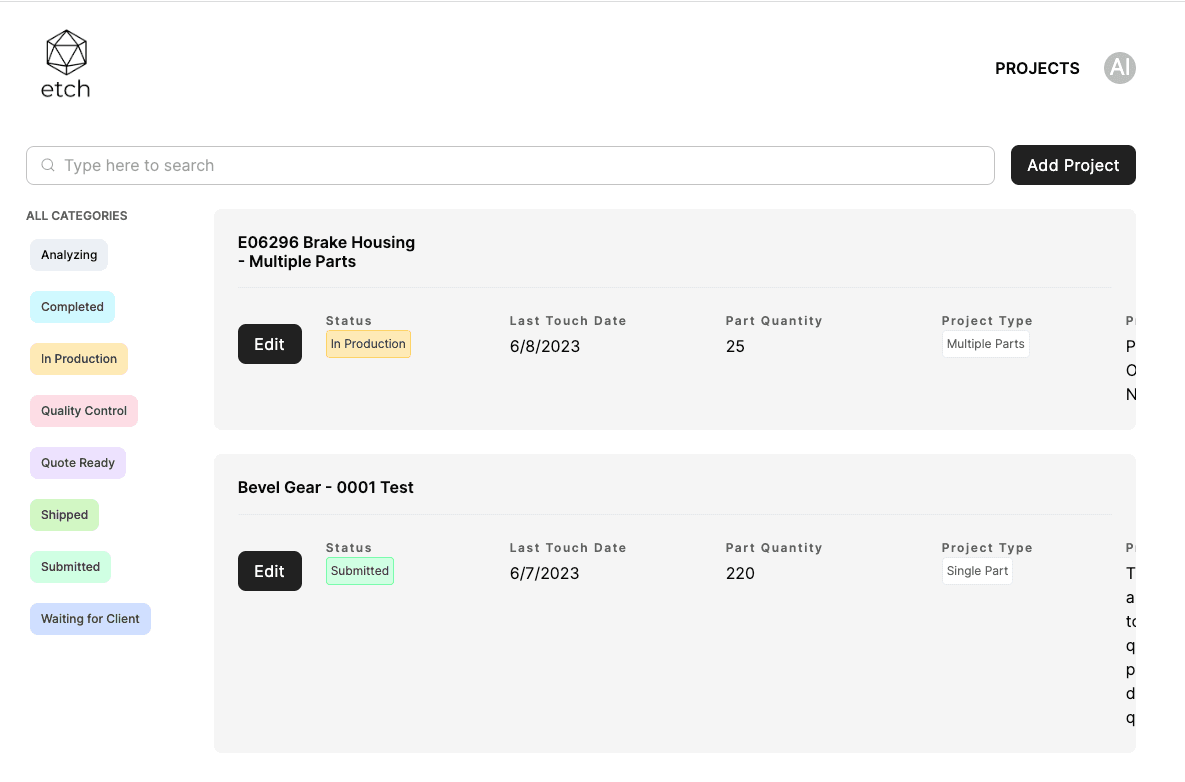
- →Project tracking agent — manages status across categories: analyzing, submitted, in production, quality control, shipped
Business Impact
What changed after implementation
- →Speed-to-quote becomes a competitive moat — the first accurate quote in a prospect's inbox wins the job
- →Quoting team shifts from repetitive analysis to exception handling and relationship management
- →Directly increases top-line revenue by converting more inbound demand without adding headcount
- →Applicable to any job-shop or make-to-order operation — machining, fabrication, injection molding, or contract manufacturing
Why it ranks
Relevant for companies researching practical AI implementation
This case study is a concrete example of AI moving beyond prompts and tools into owned business infrastructure. The pattern applies to established companies that need AI agents connected to real workflows, clear governance, human review points, and measurable operating leverage.
SterlingAI uses this style of engagement for leadership teams evaluating fractional Chief AI Officer support, AI implementation retainers, workflow automation, and practical AI agent systems.
Next step
Find the first AI employee your company should build.
If your company has similar operating constraints, start by identifying the first role AI should own, the workflow it should improve, and the ROI signal leadership can measure.
Canonical URL: https://sterlingai.dev/case-studies/manufacturing-quoting-ai-system