Consumer App · Content Engine Case Study
Content at scale, every single day.
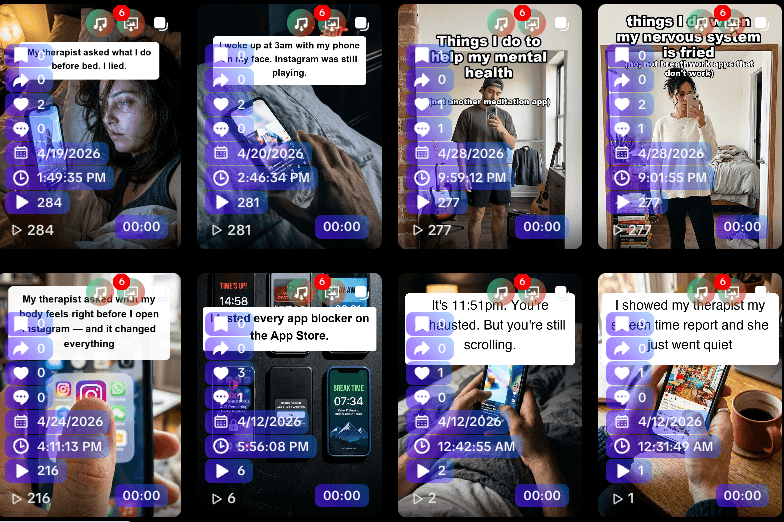
We built an end-to-end content production system that creates, publishes, and self-optimizes — daily, across platforms, without manual intervention. The system doesn't just produce content. It learns what performs, adjusts targeting by demographic and ICP, and compounds output over time.
content output vs. manual production
publish cadence — fully autonomous
manual steps from creation to publish
auto-optimization based on engagement data
Problem
The operational constraint
The company had a high-value workflow that still depended on manual analysis, scattered systems, and human follow-up. The limiting factor was not demand. It was operational capacity: the business could not scale the workflow without adding more people, more handoffs, and more management overhead.
We built an end-to-end content production system that creates, publishes, and self-optimizes — daily, across platforms, without manual intervention. The system doesn't just produce content. It learns what performs, adjusts targeting by demographic and ICP, and compounds output over time.
System Design
The AI agent operating system we deployed
Production Pipeline
- →Content generation agents produce TikTok carousels, slide sequences, and captions daily
- →Each asset is tailored to specific demographics, product positioning, and ICP segments
- →Automated formatting and scheduling — zero manual publishing steps
Auto-Optimization
- →Performance tracking agent monitors views, engagement, saves, and shares in real time
- →Optimization agent adjusts hooks, visuals, and CTAs based on what's converting
- →Audience segmentation agent refines targeting by demographic and ICP response patterns
Scale & Distribution
- →Multi-platform publishing agent distributes across TikTok, Instagram, and other channels simultaneously
- →Content repurposing agent transforms top performers into new formats automatically
- →Cadence management — consistent daily output regardless of team bandwidth
Business Impact
What changed after implementation
- →Replaces a content team's production capacity — 10x output at a fraction of the cost
- →Self-optimizing loop means content improves over time without strategic intervention
- →ICP-specific targeting ensures every piece of content speaks to the right audience segment
- →Applicable to any brand producing volume content — DTC, SaaS, services, marketplaces
Why it ranks
Relevant for companies researching practical AI implementation
This case study is a concrete example of AI moving beyond prompts and tools into owned business infrastructure. The pattern applies to established companies that need AI agents connected to real workflows, clear governance, human review points, and measurable operating leverage.
SterlingAI uses this style of engagement for leadership teams evaluating fractional Chief AI Officer support, AI implementation retainers, workflow automation, and practical AI agent systems.
Next step
Find the first AI employee your company should build.
If your company has similar operating constraints, start by identifying the first role AI should own, the workflow it should improve, and the ROI signal leadership can measure.
Canonical URL: https://sterlingai.dev/case-studies/autonomous-content-engine-ai-system